DR.JOHN'S CASE NOTES : SLAPPED CHEEK SYNDROME
Many people wrongly assume that this condition is a disease-based skin colouration of the face . This is not the case at all.
The original term " slapped face " was given to a syndrome possessed by bridge players , who suffered a barrage of flat hand slaps across the face as a consequence of their inept play and clueless bidding. Victims of this kind of assault quickly developed a bright red rash on their swollen cheeks. Even if the slaps were feather-weight , then the damage caused was often exacerbated by their acute embarrassment and shame of being exposed as useless puddings.
The motive behind their irate partners' aggressive behaviour was either to help them stay awake , or to vent their displeasure at having to suffer of ignominy of gifting undeserving opponents fortuitous tops.
The consequence of repeated slapping often left the victims with permanent red rashes on their cheeks , which were never given time to heal. As for prevention the only option available was to stay alert and duck in time. Sadly , with the majority of the players having dull reflexes to match their slow and sluggish thinking , bridge clubs today still remain the haven of red faced numpties : the true and only victims of the slapped cheek syndrome.
Showing posts with label DR.JOHN'S CASE NOTES. Show all posts
Showing posts with label DR.JOHN'S CASE NOTES. Show all posts
Friday, 8 July 2016


Wednesday, 23 December 2015
DR. JOHN'S CASE NOTES : BRIDGE PLAYERS AND SELF-DECEPTION
Bridge players are renown for deceiving themselves. Indeed , this condition becomes more acute when they take up key roles on committee.
Self-deception is a state resembling but distinguishable from that of ignorance or false belief. Every player I have ever come across falsely believes he/she is an expert at the game. But of much greater concern is that decisions made by committees are claimed , quite falsely , to be outcome of an open and fair democratic process : always correct and morally right.
Sadly their self-deception consists of a motivational blindness to facts that are in some way or for some reason undesirable or unacceptable to the individuals concerned. For instance , when facts can be produced to establish to alternative argument or point of view , bridge players will choose not to see them or accept them , because they are motivated to endorse only those facts which support their chosen position.
Self-deception is a subject which fascinates philosophers as well as psycho-analysts.In an ideal world all viewpoints and decisions should be determined on the availability of correct information , plus that level of effort needed to establish all the relevant and crucial facts . However when self-deception locks in , significant facts are conveniently overlooked. Then of course there is the failure to raise relevant questions for fear of getting unacceptable answers.
A classic example which illustrates collective self-deception by committee members involved the wrongful dismissal of a Reverend from the church. The court held that there was a deliberate falsification of the hearing and of the evidence concerned. This view was supported by the fact that not one of 38 unsolicited letters of recommendation for the Reverend received by the panel from his former congregants was entered into the final report , or even referred to in discussions. This was simply because of their positive and glowing support for the Reverend and his ministry. Yet all 4 of the solicited letters against the Reverend , obtained during the proceedings, were reproduced in the report having been declared at face value as legitimate evidence.
All this self-deception can be psychologically explained as the unconscious distortion of the appreciation of a state of affairs to satisfy the individual's own motives. In practice self-deception quickly manifests itself into bad faith, by which most opinions and decisions are predetermined , as opposed to being freely chosen by those with open minds , moral integrity and with no personal agendas or axes to grind.
Bridge players are renown for deceiving themselves. Indeed , this condition becomes more acute when they take up key roles on committee.
Self-deception is a state resembling but distinguishable from that of ignorance or false belief. Every player I have ever come across falsely believes he/she is an expert at the game. But of much greater concern is that decisions made by committees are claimed , quite falsely , to be outcome of an open and fair democratic process : always correct and morally right.
Sadly their self-deception consists of a motivational blindness to facts that are in some way or for some reason undesirable or unacceptable to the individuals concerned. For instance , when facts can be produced to establish to alternative argument or point of view , bridge players will choose not to see them or accept them , because they are motivated to endorse only those facts which support their chosen position.
Self-deception is a subject which fascinates philosophers as well as psycho-analysts.In an ideal world all viewpoints and decisions should be determined on the availability of correct information , plus that level of effort needed to establish all the relevant and crucial facts . However when self-deception locks in , significant facts are conveniently overlooked. Then of course there is the failure to raise relevant questions for fear of getting unacceptable answers.
A classic example which illustrates collective self-deception by committee members involved the wrongful dismissal of a Reverend from the church. The court held that there was a deliberate falsification of the hearing and of the evidence concerned. This view was supported by the fact that not one of 38 unsolicited letters of recommendation for the Reverend received by the panel from his former congregants was entered into the final report , or even referred to in discussions. This was simply because of their positive and glowing support for the Reverend and his ministry. Yet all 4 of the solicited letters against the Reverend , obtained during the proceedings, were reproduced in the report having been declared at face value as legitimate evidence.
All this self-deception can be psychologically explained as the unconscious distortion of the appreciation of a state of affairs to satisfy the individual's own motives. In practice self-deception quickly manifests itself into bad faith, by which most opinions and decisions are predetermined , as opposed to being freely chosen by those with open minds , moral integrity and with no personal agendas or axes to grind.
Tuesday, 8 December 2015
DR. JOHN'S CASE NOTES : ANTISOCIAL PERSONALITY DISORDER
The biggest and greatest irony of all time can be seen in the bizarre world of bridge. So many clubs proudly advertise bridge as the ultimate social experience , where men and women of all ages can come together to play the beautiful game in a quiet , relaxed and friendly environment. But the irony is of course that the demanding and competitive aspects of the game tend to attract people who are either further along the autistic spectrum , or who have anti-social personality disorders.
Kurt Schneider , an eminent psychiatrist , was the first to broaden the concept of personality disorder to include antisocial behaviour. Looking at bridge clubs in particular , his studies found that APD was more common in men than in women , and the incidence of APD was far greater in such venues than anywhere else. The majority of the male players came across as geeks , oddballs , loners , social misfits and grumpy old men. What Kurt also observed was that in most sports men competed against men , but in bridge men were also obliged to compete against women as well.
So given that APD is characterised by a callous lack of concern for the feeling of others, women of course with their sensitive nature and delicate dispositions were far more prone to being hurt and upset. Indeed , APD sufferers were seen to have a total disregard for the socials rules listed on documents relating to etiquette and best behaviour. Their irritable and aggressive behaviour could never be curbed. Lack of self-control meant bullying was commonplace , and their impulsive acts never showed any guilt or remorse towards those on the receiving end. Even more disconcerting was the fact this kind of nasty behaviour would be repeated week after week , with sufferers completely unable to learn from the experience.
Even their own partners would be legitimate targets for their antisocial behaviour , as evidenced by the number of partners they would get through on a regular basis.
However , victims afflicted with APD could when necessary appear to be nice , oozing superficial charm to play down any accusations which might come their way. Once the threat of reprimand or punishment disappears, relationships soon return to being fiery , turbulent and short-lived affairs.
Sadly , APD is a clinically defined mental disorder which closely correlates with instances of petty crime. These misdemeanours within the world of bridge encompass such acts as cheating , physical assaults , harassment , graffiti , and criminal damage. So there we have it : a social game which unfortunately attracts and harbours anti-social types. The irony could not be more obvious.
The biggest and greatest irony of all time can be seen in the bizarre world of bridge. So many clubs proudly advertise bridge as the ultimate social experience , where men and women of all ages can come together to play the beautiful game in a quiet , relaxed and friendly environment. But the irony is of course that the demanding and competitive aspects of the game tend to attract people who are either further along the autistic spectrum , or who have anti-social personality disorders.
Kurt Schneider , an eminent psychiatrist , was the first to broaden the concept of personality disorder to include antisocial behaviour. Looking at bridge clubs in particular , his studies found that APD was more common in men than in women , and the incidence of APD was far greater in such venues than anywhere else. The majority of the male players came across as geeks , oddballs , loners , social misfits and grumpy old men. What Kurt also observed was that in most sports men competed against men , but in bridge men were also obliged to compete against women as well.
So given that APD is characterised by a callous lack of concern for the feeling of others, women of course with their sensitive nature and delicate dispositions were far more prone to being hurt and upset. Indeed , APD sufferers were seen to have a total disregard for the socials rules listed on documents relating to etiquette and best behaviour. Their irritable and aggressive behaviour could never be curbed. Lack of self-control meant bullying was commonplace , and their impulsive acts never showed any guilt or remorse towards those on the receiving end. Even more disconcerting was the fact this kind of nasty behaviour would be repeated week after week , with sufferers completely unable to learn from the experience.
Even their own partners would be legitimate targets for their antisocial behaviour , as evidenced by the number of partners they would get through on a regular basis.
However , victims afflicted with APD could when necessary appear to be nice , oozing superficial charm to play down any accusations which might come their way. Once the threat of reprimand or punishment disappears, relationships soon return to being fiery , turbulent and short-lived affairs.
Sadly , APD is a clinically defined mental disorder which closely correlates with instances of petty crime. These misdemeanours within the world of bridge encompass such acts as cheating , physical assaults , harassment , graffiti , and criminal damage. So there we have it : a social game which unfortunately attracts and harbours anti-social types. The irony could not be more obvious.
Tuesday, 1 December 2015
DR. JOHN'S CASE NOTES: THE BAH BAH COMPLEX
Victims of this complex are found in large numbers in bridge clubs across the world. Many of them through gentle cajoling are persuaded to help make up committee numbers to perform the role of obliging sheep.
This condition manifests itself by a growing lack of personal confidence , which in turn compels them to adopt the opinions and views of the group. This need to follow soon becomes the most important aspect of their personal behaviour , especially when surrounded by more controlling and domineering club members. Indeed , the group's praise encourages the bah bah victim to reject their own opinions in favour of the group's. In short , this complex turns them into completely harmless sheep , willing to follow the leads and directions made by others.
This follow-my-leader merry-go-round completely runs the life of these woolly-headed sufferers , who become hostages to this debilitating affliction. Classic symptoms associated with this condition can be listed as follows:
- an inability to formulate their own position without the preliminary guidance and counselling
of the group
- high estimation of the opinions held by the group leader , which initiates the depreciation of
their own opinions , irrespective of the fact they might even be of greater merit
- high tendency to believe in the mantra recited by the group without ever questioning its
content or meaning
- the abject desire to allow the influences of others to shape and direct their lives to an
excessive almost dangerous degree
- an inability to cope with the group's indifference or condemnation towards themselves
Sadly , this complex tends develop into a vicious circle. The more they lose their own personal identity by agreeing with everything others are saying , the more despised they become. This in turn compels them to seek favour and praise by choosing to go along with the majority view , but in doing so this subjects them to even more derision and ridicule. So by becoming the ultimate sheep-like individual , the risk of dramatic consequences ( such as mental breakdowns ) heightens considerably. This bah bah complex can only be cured by relations moving towards mutual respect and esteem. However , the chances of this happening are nil because what sane person could ever respect a " yes " man , nodding dog , or an eager-to-please sycophantic creep.
Victims of this complex are found in large numbers in bridge clubs across the world. Many of them through gentle cajoling are persuaded to help make up committee numbers to perform the role of obliging sheep.
This condition manifests itself by a growing lack of personal confidence , which in turn compels them to adopt the opinions and views of the group. This need to follow soon becomes the most important aspect of their personal behaviour , especially when surrounded by more controlling and domineering club members. Indeed , the group's praise encourages the bah bah victim to reject their own opinions in favour of the group's. In short , this complex turns them into completely harmless sheep , willing to follow the leads and directions made by others.
This follow-my-leader merry-go-round completely runs the life of these woolly-headed sufferers , who become hostages to this debilitating affliction. Classic symptoms associated with this condition can be listed as follows:
- an inability to formulate their own position without the preliminary guidance and counselling
of the group
- high estimation of the opinions held by the group leader , which initiates the depreciation of
their own opinions , irrespective of the fact they might even be of greater merit
- high tendency to believe in the mantra recited by the group without ever questioning its
content or meaning
- the abject desire to allow the influences of others to shape and direct their lives to an
excessive almost dangerous degree
- an inability to cope with the group's indifference or condemnation towards themselves
Sadly , this complex tends develop into a vicious circle. The more they lose their own personal identity by agreeing with everything others are saying , the more despised they become. This in turn compels them to seek favour and praise by choosing to go along with the majority view , but in doing so this subjects them to even more derision and ridicule. So by becoming the ultimate sheep-like individual , the risk of dramatic consequences ( such as mental breakdowns ) heightens considerably. This bah bah complex can only be cured by relations moving towards mutual respect and esteem. However , the chances of this happening are nil because what sane person could ever respect a " yes " man , nodding dog , or an eager-to-please sycophantic creep.
Friday, 27 November 2015
DR . JOHN'S CASE NOTES : THE NAPOLEON COMPLEX
In the bizarre world of bridge , you will always find in every club at least one player who suffers from this egocentric complex. Often this afflicted person has physical shortcomings in terms of height and stature , but his game however will always be head and shoulders above the rest, when it comes to subtle art of bidding and card play. Victims of the Napoleon Complex are consequently blessed with high reputation and publicly acknowledged leadership qualities.
The classic symptoms of this condition are ;
- a vertically challenged physique or facial disfigurement , which they choose to ignore or hide
behind a rhetoric of bravado and self-worship
- self-centrism which is the consequence of years of self-isolation as a child , but essential as a
quality to persevere and develop his/her unique talent at bridge
- a tendency to assume leadership and dominance over others , alongside a passionate desire
to control and manipulate the masses
- the need to harness and nurture a devoted band of followers
- an uncontrollable urge to hold court , lecturing and preaching to those in attendance on the
finer and more subtle aspects of the game
Sadly however , this complex never goes away , and although it never results in others being put at risk of serious harm , there is a likelihood that excessive exposure to such a person will lead to problems such as chronic " ear-bashing " ear ache ".
In the bizarre world of bridge , you will always find in every club at least one player who suffers from this egocentric complex. Often this afflicted person has physical shortcomings in terms of height and stature , but his game however will always be head and shoulders above the rest, when it comes to subtle art of bidding and card play. Victims of the Napoleon Complex are consequently blessed with high reputation and publicly acknowledged leadership qualities.
The classic symptoms of this condition are ;
- a vertically challenged physique or facial disfigurement , which they choose to ignore or hide
behind a rhetoric of bravado and self-worship
- self-centrism which is the consequence of years of self-isolation as a child , but essential as a
quality to persevere and develop his/her unique talent at bridge
- a tendency to assume leadership and dominance over others , alongside a passionate desire
to control and manipulate the masses
- the need to harness and nurture a devoted band of followers
- an uncontrollable urge to hold court , lecturing and preaching to those in attendance on the
finer and more subtle aspects of the game
Sadly however , this complex never goes away , and although it never results in others being put at risk of serious harm , there is a likelihood that excessive exposure to such a person will lead to problems such as chronic " ear-bashing " ear ache ".
Monday, 7 September 2015
DR. JOHN'S CASE NOTES : ONEITIS
Many rank and file bridge players harbour dreams of partnering one of the club's top players. This preference , or burning desire , to partner one particular player is a classic case of oneitis.
Often this unrequited admiration or love never goes away leaving sufferers to remain unhappy and dissatisfied with their current crop of partners. They yearn for the one who they believe will give them kudos , status and success. This person represents their best chance of making into the big league.
Oneitis is a common affliction, especially amongst ambitious players desperate to remove themselves from the faceless masses. Symptoms therefore include their feelings of inadequacy , low self-esteem, frustration, hopelessness, depression , and anxiety. Left untreated , sufferers often become so dysfunctional their game goes completely to pieces. This loss of form exacerbates their inability to persuade anyone , let alone their preferred choice , to consider the idea of becoming their partner. Once this vicious circle gets established victims usually succumb to alcoholism , along with stress related outbursts at the table , and indecent acts of self-mutilation.
Indeed , other symptoms include :
1. Spending all their time and energy on figuring out a way to achieve their dream
2. Allowing their obsession to develop to the point when gross neglect and contempt for others become a routine habit
3. Misinterpreting anything said or done by their idol, which gives them false hope , such as a polite response just falling short of a direct " No " .
However , this illness can quickly develop into a chronic mental condition , causing sufferers to become fixated with the idea that bridge now offers them no meaningful pleasure whatsoever. So when this feeling of despondency kicks in , victims react by relentlessly berating their regular partners as useless toss-pots responsible for their misery, poor form and shameful results .
Many rank and file bridge players harbour dreams of partnering one of the club's top players. This preference , or burning desire , to partner one particular player is a classic case of oneitis.
Often this unrequited admiration or love never goes away leaving sufferers to remain unhappy and dissatisfied with their current crop of partners. They yearn for the one who they believe will give them kudos , status and success. This person represents their best chance of making into the big league.
Oneitis is a common affliction, especially amongst ambitious players desperate to remove themselves from the faceless masses. Symptoms therefore include their feelings of inadequacy , low self-esteem, frustration, hopelessness, depression , and anxiety. Left untreated , sufferers often become so dysfunctional their game goes completely to pieces. This loss of form exacerbates their inability to persuade anyone , let alone their preferred choice , to consider the idea of becoming their partner. Once this vicious circle gets established victims usually succumb to alcoholism , along with stress related outbursts at the table , and indecent acts of self-mutilation.
Indeed , other symptoms include :
1. Spending all their time and energy on figuring out a way to achieve their dream
2. Allowing their obsession to develop to the point when gross neglect and contempt for others become a routine habit
3. Misinterpreting anything said or done by their idol, which gives them false hope , such as a polite response just falling short of a direct " No " .
However , this illness can quickly develop into a chronic mental condition , causing sufferers to become fixated with the idea that bridge now offers them no meaningful pleasure whatsoever. So when this feeling of despondency kicks in , victims react by relentlessly berating their regular partners as useless toss-pots responsible for their misery, poor form and shameful results .
Sunday, 12 July 2015
DR.JOHN'S CASE NOTES : BAWLUS INFANTO TORMENTA ( OTHERWISE KNOWN AS THE CRY-BABY BULLY SYNDROME )
Once upon a time when men were men , there was a big difference between bullies and cry babies. The former were strong rock hard aggressors while the latter were weak , feeble , I'm-telling-my mum-about-you-did-to-me wimps.
Fast forward the last four decades and things are not so clear cut. This is the age of cry baby bullies, a hideous hybrid of victim and victor , weeper and walloper. In the bizarre world of bridge they are everywhere , these duplicitous Pushmi-Pullyus.
At the table , when nerves are fraught and tempers are high , the cry baby bully will scream abuse at his woeful partners or annoying opponents until they decide to snap back with equal venom. At this point the aggressor immediately changes into a blubbering victim , drowning in floods of tears , threatening to take his ball home......or fleeing to the bar room area where he " feels safe ". The hypocrisy of those players affected by bawlus infanto tormenta is overwhelming : they constantly bang on about their own mental fragility yet mock others in an unceasing and merciless fashion , without any concern whatsoever for their feelings.
Cry baby bullies are serial complainers , who crave help and support from others in skillfully connived vendetta campaigns to get plain speaking members , who had the gall to answer back and retaliate, removed from the club.
Indeed , many eminent psycho-analysts such as myself , define this type of behaviour as an unusual variant of the Munchhausen's syndrome: manipulating others to bring misery upon themselves in order to complain about it and seek sympathy from caring bystanders. The aggressive responses which inevitably come their way are , of course , completely self-induced.
Nevertheless cry baby bullies usually end up being abandoned and isolated , as club members come to realize the type of person they really are. Moreover , whenever sufferers of this disturbing condition believe " others " have adopted an opposite point of view.....shock..... horror.....to theirs , they feel cheated and betrayed. Then they start claiming that the presence of anyone opposed to them are actually violating their " safe territory " , even though they are standing several yards away. Cry baby bullies besiege committee members to support them in their hour of need to act upon their complaints and wishes. Otherwise they too will be subjected both tears and wrath , before finding themselves in the firing line with allegations of gross incompetence and neglect of duty.
This syndrome above all others sums up why the world of bridge is so utterly bizarre !
Once upon a time when men were men , there was a big difference between bullies and cry babies. The former were strong rock hard aggressors while the latter were weak , feeble , I'm-telling-my mum-about-you-did-to-me wimps.
Fast forward the last four decades and things are not so clear cut. This is the age of cry baby bullies, a hideous hybrid of victim and victor , weeper and walloper. In the bizarre world of bridge they are everywhere , these duplicitous Pushmi-Pullyus.
At the table , when nerves are fraught and tempers are high , the cry baby bully will scream abuse at his woeful partners or annoying opponents until they decide to snap back with equal venom. At this point the aggressor immediately changes into a blubbering victim , drowning in floods of tears , threatening to take his ball home......or fleeing to the bar room area where he " feels safe ". The hypocrisy of those players affected by bawlus infanto tormenta is overwhelming : they constantly bang on about their own mental fragility yet mock others in an unceasing and merciless fashion , without any concern whatsoever for their feelings.
Cry baby bullies are serial complainers , who crave help and support from others in skillfully connived vendetta campaigns to get plain speaking members , who had the gall to answer back and retaliate, removed from the club.
Indeed , many eminent psycho-analysts such as myself , define this type of behaviour as an unusual variant of the Munchhausen's syndrome: manipulating others to bring misery upon themselves in order to complain about it and seek sympathy from caring bystanders. The aggressive responses which inevitably come their way are , of course , completely self-induced.
Nevertheless cry baby bullies usually end up being abandoned and isolated , as club members come to realize the type of person they really are. Moreover , whenever sufferers of this disturbing condition believe " others " have adopted an opposite point of view.....shock..... horror.....to theirs , they feel cheated and betrayed. Then they start claiming that the presence of anyone opposed to them are actually violating their " safe territory " , even though they are standing several yards away. Cry baby bullies besiege committee members to support them in their hour of need to act upon their complaints and wishes. Otherwise they too will be subjected both tears and wrath , before finding themselves in the firing line with allegations of gross incompetence and neglect of duty.
This syndrome above all others sums up why the world of bridge is so utterly bizarre !
Thursday, 9 July 2015
DR. JOHN'S CASE NOTES : ABOULOMANIA
" My partner respects , he respects me not, he respects me , he respects me not..." could certainly be the mantra of bridge players who unfortunately suffer from this generally unknown mental disorder , both characterised and epitomised by crippling indecision.
Many eminent psychoanalysts , such as myself , define this affliction as " the paralysis of the mind ". Indeed , a staggeringly high proportion of slow players are diagnosed with this particular disorder known as aboulomania. Sufferers will , before the bridge event gets underway , appear mentally alert and sharp in all aspects of analysis and problem solving. However , as soon as they sit down at the table their brains turn to mush. The ability to make quick decisions completely disappears. Even when faced with simple easy choices like which way to take a finesse, which card to discard , or how many rounds of trumps should be taken,
they run into a major psychological block. They become overwhelmed by anxiety and indecision. Once they become aware of the growing impatience and disbelief of others at the time , the more they get anxious . Then , inevitably , paralysis of the mental function sets in.
Most sufferers say their incapacity or chronic indecision originates from the need to be a 100% certain. Hence the sufferer can become paralysed in his/her inability to make a decision even when probabilities of success are as high as 90%. The mere fact that a finesse through North is almost certain to work , the nagging doubt.... that on this occasion the 10 % option of taking the finesse through South should be the one to take ....will slowly but surely eat mercilessly away at their confidence. A sufferer will become paralysed by the fear that to reject the outside 1-to-10 chance is the very choice which was destined to be successful. Experience tells them that going with the odds doesn't always work out. So what in God's name should they do ?
So imagine what it is like for a victim of aboulomania to find himself facing several choices , such as which suit to make an opening lead from , and which card to pick ? The sheer scale and magnitude of the choices involved will send the player into the think tank for an indeterminable length of time. Racked with crippling indecision , hesitancy and despair will be deeply etched on his distorted and twisted face. Doubting each and every considered option , nothing ever emerges from his hand. The agony of those looking on only intensifies his inability to arrive at a decision. So when at last a card does emerge from his hand , it is quickly withdrawn and put back with the others. Sometimes aboulomania manifests itself with complete paralysis of movement , self-induced sleep and comatose-like trances.
Sadly , there is no cure, because even though there are a vast range of treatments available , sufferers seem completely unable to decide on which one to choose.
" My partner respects , he respects me not, he respects me , he respects me not..." could certainly be the mantra of bridge players who unfortunately suffer from this generally unknown mental disorder , both characterised and epitomised by crippling indecision.
Many eminent psychoanalysts , such as myself , define this affliction as " the paralysis of the mind ". Indeed , a staggeringly high proportion of slow players are diagnosed with this particular disorder known as aboulomania. Sufferers will , before the bridge event gets underway , appear mentally alert and sharp in all aspects of analysis and problem solving. However , as soon as they sit down at the table their brains turn to mush. The ability to make quick decisions completely disappears. Even when faced with simple easy choices like which way to take a finesse, which card to discard , or how many rounds of trumps should be taken,
they run into a major psychological block. They become overwhelmed by anxiety and indecision. Once they become aware of the growing impatience and disbelief of others at the time , the more they get anxious . Then , inevitably , paralysis of the mental function sets in.
Most sufferers say their incapacity or chronic indecision originates from the need to be a 100% certain. Hence the sufferer can become paralysed in his/her inability to make a decision even when probabilities of success are as high as 90%. The mere fact that a finesse through North is almost certain to work , the nagging doubt.... that on this occasion the 10 % option of taking the finesse through South should be the one to take ....will slowly but surely eat mercilessly away at their confidence. A sufferer will become paralysed by the fear that to reject the outside 1-to-10 chance is the very choice which was destined to be successful. Experience tells them that going with the odds doesn't always work out. So what in God's name should they do ?
So imagine what it is like for a victim of aboulomania to find himself facing several choices , such as which suit to make an opening lead from , and which card to pick ? The sheer scale and magnitude of the choices involved will send the player into the think tank for an indeterminable length of time. Racked with crippling indecision , hesitancy and despair will be deeply etched on his distorted and twisted face. Doubting each and every considered option , nothing ever emerges from his hand. The agony of those looking on only intensifies his inability to arrive at a decision. So when at last a card does emerge from his hand , it is quickly withdrawn and put back with the others. Sometimes aboulomania manifests itself with complete paralysis of movement , self-induced sleep and comatose-like trances.
Sadly , there is no cure, because even though there are a vast range of treatments available , sufferers seem completely unable to decide on which one to choose.
Thursday, 18 June 2015

Wednesday, 17 June 2015
AS FINANCIAL DISASTER LOOMS BIGOT CALLS IN ON DR. JOHN..............

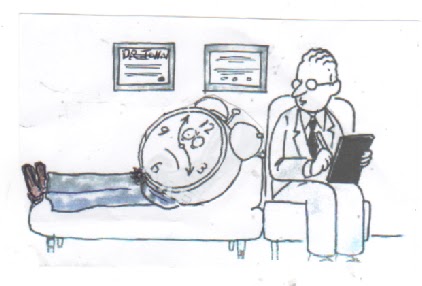
" So Bigot.....it seems you're riddled with acute anxiety and stress. You believe you've
a major problem on your hands.....simply because of what the club's treasurer has told
you......something which has set your alarm bells ringing....."
" So Bigot.....it seems you're riddled with acute anxiety and stress. You believe you've
a major problem on your hands.....simply because of what the club's treasurer has told
you......something which has set your alarm bells ringing....."
Saturday, 16 May 2015
INSIDE THE MIND OF A SERIAL BRIDGEMATE THROWER
( Dr.John talks to a leading criminologist , Professor Fuller Crapp )
Dr.J : Am I right to say that the only way to understand the outrageous actions of a serial bridgemate thrower is for you to go inside of mind of such a lunatic ?
Prof : Without a doubt....
Dr.J : And what will you expect to find inside his mind ?
Prof : Who knows ?
Dr. J : But I'm asking you because you're the one person who ought to know what makes this person behave like that
Prof : Well, it's more than likely I'm going to discover that this madman is nothing more than a pathetic loner
Dr. J : Hold on a mo....from my study of this individual he's a notorious womaniser, who also loves to go out on weekend benders with his drinking mates......not to mention his love of parties , social gatherings and orgies , where drinks are likely to be free. The man is reputed to be an ageing , out-going, gregarious, hedonistic playboy
Prof : Well in that case then ....I would expect to find this person being the victim of a tragic and troubled childhood , starved of emotional support and love.....a childhood perhaps blighted by constant bullying at school and rejection by his peers
Dr. J : Not so....he had a happy, rampant childhood....one which many of us would envy. He was revered by all his followers and gang members, constantly attracting the attention of girls who knew how to give a young man a really good time. His devoted parents read all the books on how to bring up a fully grounded, well balanced , loving child.
Prof : Oh dear ....this narrows it down to only one or two possible causes for these bridgemate tantrums. Either the man has an undiagnosed brain injury as a result of an accident , fall or attack .....or he has a genetic make up which dictates the bizarre way he behaves
Dr. J : Sorry to contradict your assumptions... but neither of those two possibilities apply. He has never suffered , as far as I know , any injury of any kind , relying on others to do carry out any dangerous and dirty work on his behalf , where health and safety risks are involved........ And what's more his exemplary behaviour is only undermined by occasional bouts impatience and intolerance , when forced to confront fools he has the misfortune to encounter. In fact the man is as normal as you and I....
Prof : Oh....then all this leaves me to conclude that there is only one characteristic of his mind left....worthy of consideration.....one which matches the highly disturbing trait .... all psychopathic bridge players are known to possess
Dr. J : And what's that ?
Prof : An alarming predisposition towards hurtling bridgemates with malice aforethought at players who need sharp , pointed reminders on the rules and ethics of the game.....a way of hammering home important messages... so to speak
Dr. J : Professor.....that was a truly brilliant analysis
Prof : I know...I know......
...
( Dr.John talks to a leading criminologist , Professor Fuller Crapp )
Dr.J : Am I right to say that the only way to understand the outrageous actions of a serial bridgemate thrower is for you to go inside of mind of such a lunatic ?
Prof : Without a doubt....
Dr.J : And what will you expect to find inside his mind ?
Prof : Who knows ?
Dr. J : But I'm asking you because you're the one person who ought to know what makes this person behave like that
Prof : Well, it's more than likely I'm going to discover that this madman is nothing more than a pathetic loner
Dr. J : Hold on a mo....from my study of this individual he's a notorious womaniser, who also loves to go out on weekend benders with his drinking mates......not to mention his love of parties , social gatherings and orgies , where drinks are likely to be free. The man is reputed to be an ageing , out-going, gregarious, hedonistic playboy
Prof : Well in that case then ....I would expect to find this person being the victim of a tragic and troubled childhood , starved of emotional support and love.....a childhood perhaps blighted by constant bullying at school and rejection by his peers
Dr. J : Not so....he had a happy, rampant childhood....one which many of us would envy. He was revered by all his followers and gang members, constantly attracting the attention of girls who knew how to give a young man a really good time. His devoted parents read all the books on how to bring up a fully grounded, well balanced , loving child.
Prof : Oh dear ....this narrows it down to only one or two possible causes for these bridgemate tantrums. Either the man has an undiagnosed brain injury as a result of an accident , fall or attack .....or he has a genetic make up which dictates the bizarre way he behaves
Dr. J : Sorry to contradict your assumptions... but neither of those two possibilities apply. He has never suffered , as far as I know , any injury of any kind , relying on others to do carry out any dangerous and dirty work on his behalf , where health and safety risks are involved........ And what's more his exemplary behaviour is only undermined by occasional bouts impatience and intolerance , when forced to confront fools he has the misfortune to encounter. In fact the man is as normal as you and I....
Prof : Oh....then all this leaves me to conclude that there is only one characteristic of his mind left....worthy of consideration.....one which matches the highly disturbing trait .... all psychopathic bridge players are known to possess
Dr. J : And what's that ?
Prof : An alarming predisposition towards hurtling bridgemates with malice aforethought at players who need sharp , pointed reminders on the rules and ethics of the game.....a way of hammering home important messages... so to speak
Dr. J : Professor.....that was a truly brilliant analysis
Prof : I know...I know......
...
Thursday, 14 May 2015
DR. JOHN'S CASE NOTES : THE WINNIE THE POOH SYNDROME
It seems to be the case that bridge players the world over have fallen victim to this particular syndrome , without it ever being properly diagnosed. This is because the condition is a combination of three disorders of which only one is occasionally recognised and identified.
Named after Winnie The Pooh , who really was a rather disturbed bear , details of this particular all encompassing syndrome were first published in an article by the Canadian Medical Association. Researchers there diagnosed and identified the bear as having 3 disorders which clearly match those of many bridge players. These involve the following behaviours.
1. Attention Deficit Hyperactivity Disorder. Here the victim suffers from the inattentive sub-type, where he exhibits careless and indifferent behaviour towards those around him , which in the case of bridge players includes partners, opponents and tournament directors.
2. Impulsivity and obsessive fixations. Bridge players , just like Pooh , are obsessed by the idea that everyone is out to get them. Another deep seated obsession is their overwhelming desire to grab glory , wherever and whenever they can , irrespective of the cost and the risks involved. The glory might not be a jar of honey , but every top they can get is worth its weight in gold and self-adulation. This fixation has clearly contributed to the development of a results merchant persona , and the callous adoption of unethical and coffee-housing tactics in order to screw their opponents.
3. Obsessive-compulsive disorder. Here sufferers exhibit repetitive counting. What cards have been played in each suit , and how the remaining cards may be divided between the other three players. HCPs are counted out as the cards are played , leaving further counting to be done as to what HCPs could be left in the two unseen hands. Given that the Winnie The Pooh syndrome has a combination of disorders, the likelihood is that a victim of this condition will develop a habit of talking out loud , as if he had a giant invisible, impaired hearing, rabbit sitting on his knee.
Sadly , treating victims with combination disorders is far from easy , and as yet no successful treatment or therapy has been found for this particular syndrome. Indeed, Winnie The Pooh , despite the best efforts of his friends to help him and change his ways , seems utterly content to stay the same. Bridge players , clearly, are no different.
It seems to be the case that bridge players the world over have fallen victim to this particular syndrome , without it ever being properly diagnosed. This is because the condition is a combination of three disorders of which only one is occasionally recognised and identified.
Named after Winnie The Pooh , who really was a rather disturbed bear , details of this particular all encompassing syndrome were first published in an article by the Canadian Medical Association. Researchers there diagnosed and identified the bear as having 3 disorders which clearly match those of many bridge players. These involve the following behaviours.
1. Attention Deficit Hyperactivity Disorder. Here the victim suffers from the inattentive sub-type, where he exhibits careless and indifferent behaviour towards those around him , which in the case of bridge players includes partners, opponents and tournament directors.
2. Impulsivity and obsessive fixations. Bridge players , just like Pooh , are obsessed by the idea that everyone is out to get them. Another deep seated obsession is their overwhelming desire to grab glory , wherever and whenever they can , irrespective of the cost and the risks involved. The glory might not be a jar of honey , but every top they can get is worth its weight in gold and self-adulation. This fixation has clearly contributed to the development of a results merchant persona , and the callous adoption of unethical and coffee-housing tactics in order to screw their opponents.
3. Obsessive-compulsive disorder. Here sufferers exhibit repetitive counting. What cards have been played in each suit , and how the remaining cards may be divided between the other three players. HCPs are counted out as the cards are played , leaving further counting to be done as to what HCPs could be left in the two unseen hands. Given that the Winnie The Pooh syndrome has a combination of disorders, the likelihood is that a victim of this condition will develop a habit of talking out loud , as if he had a giant invisible, impaired hearing, rabbit sitting on his knee.
Sadly , treating victims with combination disorders is far from easy , and as yet no successful treatment or therapy has been found for this particular syndrome. Indeed, Winnie The Pooh , despite the best efforts of his friends to help him and change his ways , seems utterly content to stay the same. Bridge players , clearly, are no different.
Sunday, 19 April 2015
DR.JOHN'S CASE NOTES : THE RORSCHACH SYNDROME
Once this particular syndrome presents itself , bridge players immediately develop the disturbing habit of complaining about others sitting at their table , even though they may be innocent of alleged offensive behaviour or making rude remarks.
Victims of the Rorschach Syndrome lose the ability to see things as they really are. They develop a nasty habit of providing a completely different , albeit incorrect , version of an incident , with a view to getting others into serious trouble. These factual distortions , gross exaggerations and lies are all based on what they think they saw and heard , as opposed to what actually took place.
If the syndrome is present in more than one witness to an incident , then each complaint which comes will be substantially different , in that various allegations will be made on an alternative interpretations of the same incident , reflecting a completely different set of lies. When multiple complaint letters come in about alleged misconduct , there is never a consensus as to what wrongdoing has taken place because imagination has taken over from accurate memory and recall of the facts.
One example of the syndrome at work was when a player , who simply moved a bridgemate across a table for others to see , found himself being accused of assault . Two of players at the table had already been diagnosed as acute sufferers , and so it came as no surprise when one alleged that the bridgemate had been thrown at him with considerable force , while the other alleged that it had been used like a hand-held brick to flatten his partner's nose.
Psychoanalysts the world over have for years established bridge players as being severely acute sufferers , when compared to any other group of people. When players at Nottingham BC were asked to stare at a sheet of paper with a smudged ink blot in the middle , a multitude of answers came back as to what image it depicted. Those free of the syndrome gave answers which were innocent and had much in common. The Rorschach sufferers came back with their unique lurid , violent and sexually explicit interpretations , reflecting in the process the darker side of their personalities, and their extremely warped and twisted imaginations.
This recent bit of research , carried out by the Nottingham University Psychology Department revealed two things : (i) the high proportion of bridge club members with this disturbing syndrome , and (ii ) how the answers given by the syndrome victims revealed so much more about their inner demons , than any deep or probing interview could possibly achieve.
Once this particular syndrome presents itself , bridge players immediately develop the disturbing habit of complaining about others sitting at their table , even though they may be innocent of alleged offensive behaviour or making rude remarks.
Victims of the Rorschach Syndrome lose the ability to see things as they really are. They develop a nasty habit of providing a completely different , albeit incorrect , version of an incident , with a view to getting others into serious trouble. These factual distortions , gross exaggerations and lies are all based on what they think they saw and heard , as opposed to what actually took place.
If the syndrome is present in more than one witness to an incident , then each complaint which comes will be substantially different , in that various allegations will be made on an alternative interpretations of the same incident , reflecting a completely different set of lies. When multiple complaint letters come in about alleged misconduct , there is never a consensus as to what wrongdoing has taken place because imagination has taken over from accurate memory and recall of the facts.
One example of the syndrome at work was when a player , who simply moved a bridgemate across a table for others to see , found himself being accused of assault . Two of players at the table had already been diagnosed as acute sufferers , and so it came as no surprise when one alleged that the bridgemate had been thrown at him with considerable force , while the other alleged that it had been used like a hand-held brick to flatten his partner's nose.
Psychoanalysts the world over have for years established bridge players as being severely acute sufferers , when compared to any other group of people. When players at Nottingham BC were asked to stare at a sheet of paper with a smudged ink blot in the middle , a multitude of answers came back as to what image it depicted. Those free of the syndrome gave answers which were innocent and had much in common. The Rorschach sufferers came back with their unique lurid , violent and sexually explicit interpretations , reflecting in the process the darker side of their personalities, and their extremely warped and twisted imaginations.
This recent bit of research , carried out by the Nottingham University Psychology Department revealed two things : (i) the high proportion of bridge club members with this disturbing syndrome , and (ii ) how the answers given by the syndrome victims revealed so much more about their inner demons , than any deep or probing interview could possibly achieve.
Monday, 13 April 2015
DR. JOHN INTERVIEWS BIGOT-JOHNSON , THE CONTROVERSIAL NEW CHAIRMAN OF THE CARDINALS BRIDGE CLUB........
Dr.J : Is it true that prior to seizing the job of chairman, you were a complete nobody in the club with no idea or feeling about the game of bridge ?
B-J : It's true.......but God am I smart....but hey , I don't like the tone of your voice or the implied criticism behind that question
Dr.J : Is it also true that dozens of members are concerned about your lust for power , and your unshakable determination to be in total control , making all the decisions
B-J : Yes indeed ....because let's face it democratically run committees are a joke. Democracy is either an excuse for mob rule or a hapless, lengthy process, where only compromise decisions can ever get reached .....none of which satisfy anyone , or achieve any worthwhile goal. Put a dictatorship in place and things get done fast and effectively
Dr.J : I see....
B-J : Moreover democracy is for those who are happy to lurch from one set of objectives back to another. It is riddled with procrastination , indecision , contradictions and policy reversals. Under my rule..... change only takes place in a forward direction , with no deviations or diversions. Consequently sustained progress can be achieved in a no-nonsense and ruthlessly efficient way
Dr.J : Well , I'm putting you down as a control freak. Someone with delusions of your own sense of self-importance. Someone with delusional fantasies of power , relevance and omnipotence .....all of which are fuelled by your grossly inflated self-esteem
B-J : Listen you .....all of us suffer from narcissistic personality disorders ....mine appear to be a little more acute
Dr.J : Yes....but your over-developed symptoms have manifested themselves into heartless , bullying , megalomaniac character traits
B-J : I resent that analysis.....the simple truth is that I'm an extremely bright and intelligent person with strong convictions about what needs to be done , and how to go about getting things done. Most people who get elected onto committees are dim-witted , dilatory , weaklings.....useless appendages who hamper the efforts of those who want to achieve. It takes balls to commandeer and combine several keys posts into the chairmanship role.....especially in the face of whinging , whining whinnies , who hate having their delicate little noses put out of joint
Dr. J : But is it not the case that your ruthless and brutal leadership has caused several super workers to resign
B-J : Those deserting tosspots were pushy , interfering busy bodies who were out to usurp my authority , and to undermine my plans. They jumped before they were pushed !
Dr.J : It seems to me that along side your complex ridden personality you have this insane delusional belief that you are an expert in all aspects of bridge and committee work , when clearly the opposite is true. You have orchestrated a coup putting democracy to the sword. So please tell me how you managed to get so many unquestioning and blind supporters to fall in line ?
B-J : Look....the thing about puppets is that (a) they are all stupid , and (b) they are all willing to sing and dance to the same tune. This enables me to call all the shots and to get things done without any obstacles , restraints or barriers being put in my way. Thankfully , the people on my committee now are all ignoramuses, who fail to grasp what the issues really are ....let alone what my secret agenda is about. And because they're so clueless , they are more than happy to toe the line.... and to follow me as their leader
Dr.J : So would you agree then that you are nothing more than a pathological egotist ?
B-J : My God you've hit the nail on the head there.....and I feel it is only right and fair to hit a nail on top of your head...................Ronnie hold him down while I get Reggie to find my tool box
Dr.J : Is it true that prior to seizing the job of chairman, you were a complete nobody in the club with no idea or feeling about the game of bridge ?
B-J : It's true.......but God am I smart....but hey , I don't like the tone of your voice or the implied criticism behind that question
Dr.J : Is it also true that dozens of members are concerned about your lust for power , and your unshakable determination to be in total control , making all the decisions
B-J : Yes indeed ....because let's face it democratically run committees are a joke. Democracy is either an excuse for mob rule or a hapless, lengthy process, where only compromise decisions can ever get reached .....none of which satisfy anyone , or achieve any worthwhile goal. Put a dictatorship in place and things get done fast and effectively
Dr.J : I see....
B-J : Moreover democracy is for those who are happy to lurch from one set of objectives back to another. It is riddled with procrastination , indecision , contradictions and policy reversals. Under my rule..... change only takes place in a forward direction , with no deviations or diversions. Consequently sustained progress can be achieved in a no-nonsense and ruthlessly efficient way
Dr.J : Well , I'm putting you down as a control freak. Someone with delusions of your own sense of self-importance. Someone with delusional fantasies of power , relevance and omnipotence .....all of which are fuelled by your grossly inflated self-esteem
B-J : Listen you .....all of us suffer from narcissistic personality disorders ....mine appear to be a little more acute
Dr.J : Yes....but your over-developed symptoms have manifested themselves into heartless , bullying , megalomaniac character traits
B-J : I resent that analysis.....the simple truth is that I'm an extremely bright and intelligent person with strong convictions about what needs to be done , and how to go about getting things done. Most people who get elected onto committees are dim-witted , dilatory , weaklings.....useless appendages who hamper the efforts of those who want to achieve. It takes balls to commandeer and combine several keys posts into the chairmanship role.....especially in the face of whinging , whining whinnies , who hate having their delicate little noses put out of joint
Dr. J : But is it not the case that your ruthless and brutal leadership has caused several super workers to resign
B-J : Those deserting tosspots were pushy , interfering busy bodies who were out to usurp my authority , and to undermine my plans. They jumped before they were pushed !
Dr.J : It seems to me that along side your complex ridden personality you have this insane delusional belief that you are an expert in all aspects of bridge and committee work , when clearly the opposite is true. You have orchestrated a coup putting democracy to the sword. So please tell me how you managed to get so many unquestioning and blind supporters to fall in line ?
B-J : Look....the thing about puppets is that (a) they are all stupid , and (b) they are all willing to sing and dance to the same tune. This enables me to call all the shots and to get things done without any obstacles , restraints or barriers being put in my way. Thankfully , the people on my committee now are all ignoramuses, who fail to grasp what the issues really are ....let alone what my secret agenda is about. And because they're so clueless , they are more than happy to toe the line.... and to follow me as their leader
Dr.J : So would you agree then that you are nothing more than a pathological egotist ?
B-J : My God you've hit the nail on the head there.....and I feel it is only right and fair to hit a nail on top of your head...................Ronnie hold him down while I get Reggie to find my tool box
Sunday, 28 December 2014
DR. JOHN'S CASE NOTES : FMD ( APHTHAE EPIZOOTICAE )
FMD is a rare form of foot and mouth disease affecting humans , where victims are often referred to as foul mouthed devils. Bridge clubs unfortunately are notorious for being the breeding grounds for this particular human strain of the virus. Victims develop devil like characteristics, along with cloven-hoofed feet , such as spewing out bile and abuse to anyone who dares upset or annoy them.
Infected players develop an unwavering desire to put their feet right in it , by opening their mouths once too often , screaming obscenities and accusations to all and sundry. As a consequence of relentless screaming and shouting , victims' mouths become badly blistered. In some cases the constant foot stomping results in ruptures and acute lameness.
FMD is beginning to have severe implications for the club's finances, since being a highly infectious virus it causes widespread fear and panic to those who free of any symptoms. With clubs seeing unaffected members leave in their droves , table numbers have plummeted well below their break-even points.
The virus responsible for the disease is a piconavirus , the prototypic member of the genus aphthovirus. Infection occurs when the virus particle is taken into a cell of the host. The cell is then forced to manufacture thousands of copies of the virus , and eventually bursts , releasing the new particles into the blood. The virus can be transmitted in a number of ways , including body-contact with carriers , handling contaminated cards , and being over-powered by blasts of hot-air abuse bellowing out from victims' mouths
Control measures involve vaccines and quarantine. In extreme cases sufferers need to be put down or banished completely from the bridge playing areas. Government compensation schemes are in place to help off-set the costs incurred.
FMD is a rare form of foot and mouth disease affecting humans , where victims are often referred to as foul mouthed devils. Bridge clubs unfortunately are notorious for being the breeding grounds for this particular human strain of the virus. Victims develop devil like characteristics, along with cloven-hoofed feet , such as spewing out bile and abuse to anyone who dares upset or annoy them.
Infected players develop an unwavering desire to put their feet right in it , by opening their mouths once too often , screaming obscenities and accusations to all and sundry. As a consequence of relentless screaming and shouting , victims' mouths become badly blistered. In some cases the constant foot stomping results in ruptures and acute lameness.
FMD is beginning to have severe implications for the club's finances, since being a highly infectious virus it causes widespread fear and panic to those who free of any symptoms. With clubs seeing unaffected members leave in their droves , table numbers have plummeted well below their break-even points.
The virus responsible for the disease is a piconavirus , the prototypic member of the genus aphthovirus. Infection occurs when the virus particle is taken into a cell of the host. The cell is then forced to manufacture thousands of copies of the virus , and eventually bursts , releasing the new particles into the blood. The virus can be transmitted in a number of ways , including body-contact with carriers , handling contaminated cards , and being over-powered by blasts of hot-air abuse bellowing out from victims' mouths
Control measures involve vaccines and quarantine. In extreme cases sufferers need to be put down or banished completely from the bridge playing areas. Government compensation schemes are in place to help off-set the costs incurred.
Tuesday, 14 October 2014
NEWSFLASH : DR. JOHN FINALLY GETS TO KNOW THE REAL BIGOT-JOHNSON.......
Dr. J : So you believe that in one of your former lives... you were none other but the infamous Sir Francis Dashwood.......owner and founder of the notorious Hell Fire Club
B-J: The very man....
Dr.J : So you obviously believe in re-incarnation ?
B-J : Indeed I do......indeed I do
Dr.J : And what are you hoping to be in your next after-life ? A world class bridge expert revered and respected by all your peers ?
B-J : Unfortunately not.....I'm down to be an insect
 Dr.J : An insect.......that's awful.....it's too horrible to think about
B-J : Oh .....far from it.....the experience is one I'm going to relish.......being a fly on a wall..... humping unsuspecting females.....in between bouts of spying on others
Dr.J : Bigot ..... it seems the spirit of SIr Francis Dashwood will never leave you
B-J : Yes....you're absolutely right
Dr. J : So you believe that in one of your former lives... you were none other but the infamous Sir Francis Dashwood.......owner and founder of the notorious Hell Fire Club
B-J: The very man....
Dr.J : So you obviously believe in re-incarnation ?
B-J : Indeed I do......indeed I do
Dr.J : And what are you hoping to be in your next after-life ? A world class bridge expert revered and respected by all your peers ?
B-J : Unfortunately not.....I'm down to be an insect
Dr.J : An insect.......that's awful.....it's too horrible to think aboutB-J : Oh .....far from it.....the experience is one I'm going to relish.......being a fly on a wall..... humping unsuspecting females.....in between bouts of spying on others
Dr.J : Bigot ..... it seems the spirit of SIr Francis Dashwood will never leave you
B-J : Yes....you're absolutely right
Friday, 6 June 2014
DR. JOHN INVESTIGATES Part 3.........
Social norms, too , play an important role in the decision whether or not to cheat. If players perceive others as not abiding by the rules , then many forms of unethical behaviour must appear be acceptable, or subject to the proverbial blind eye. When the game has been corrupted by lax enforcement of the rules , then players are far more likely to be dishonest. Often the social norm within a bridge club is to harbour suspicions but to ignore them , and certainly not to voice them. The stigma of making false or high speculative allegations of cheating creates a fear factor , which the cheaters will exploit to the full. Given that many players subscribe to the old adage of " it's never right for the pot to call the kettle black ", there appears to be a perverse code of (dis)honour among cheats. If cheating is going on at other tables , then players will view their own behaviour as having very little impact.
Indeed, the incidence of cheating increases if players are placed in a position of power, either through age, seniority, rank , status , and in depth of knowledge of the rules. My research suggests that players who assume power are greatly tempted to abuse it. Indeed , society rewards and values power and achievement , encouraging the corrupt to cheat again and again.
Consequently, a mindset is created luring bridge players to engage in unethical self-promoting behaviour. Results of course represent that achievement , whereby the sole preoccupation is about getting tops. The enjoyment and experience of playing the game is of no significance. Cheats are not interested in " mastery " goals, only in notching up a large number of imps on each and every board.
Sadly , bridge is a game where referees and directors never observe play at the tables. They are so few of them. Sadly, they are called into action only after a table incident or an alleged breach of the rules has occurred. The real policing it seems has to be done by the players , on each other , at the table, but as mentioned before this rarely happens. There is always too much to think to consider wasting precious energy and concentration on what opponents may ( or may not ) be getting up to. Careful scrutiny of their behaviour is extremely difficult over 3 boards , if not impossible. When hard evidence is missing and only suspicions remain, then players will continue to feel safe in their own " anything goes " centre for approved cheating.
On a final note , pernicious cheating can become self-reinforcing. So when players cheat , they develop a tendency to rationalise their behaviour , which compounds their desire to carry on cheating. " I don't think I'm cheating " is one classic response. Another is " That's not cheating really " , or " It's the way I do things...... like every one else in this club ". Consequently , any one who is accused of cheating adopts an attitude , which fully justifies their actions. A classic case of self-delusion and/or denial. Either way , this line of reasoning , makes them feel better , but it also encourages them to cheat again. They rationalise unethical behaviour , they accept it , and they cheat once more. All I see are players becoming morally disengaged from their conscience , keen to forget moral codes of honesty and sportsmanship. Cheating , it seems , causes a self-justifying block on ethical considerations , especial those which would certainly undermine their chances of securing better scores , glory and fame.
Social norms, too , play an important role in the decision whether or not to cheat. If players perceive others as not abiding by the rules , then many forms of unethical behaviour must appear be acceptable, or subject to the proverbial blind eye. When the game has been corrupted by lax enforcement of the rules , then players are far more likely to be dishonest. Often the social norm within a bridge club is to harbour suspicions but to ignore them , and certainly not to voice them. The stigma of making false or high speculative allegations of cheating creates a fear factor , which the cheaters will exploit to the full. Given that many players subscribe to the old adage of " it's never right for the pot to call the kettle black ", there appears to be a perverse code of (dis)honour among cheats. If cheating is going on at other tables , then players will view their own behaviour as having very little impact.
Indeed, the incidence of cheating increases if players are placed in a position of power, either through age, seniority, rank , status , and in depth of knowledge of the rules. My research suggests that players who assume power are greatly tempted to abuse it. Indeed , society rewards and values power and achievement , encouraging the corrupt to cheat again and again.
Consequently, a mindset is created luring bridge players to engage in unethical self-promoting behaviour. Results of course represent that achievement , whereby the sole preoccupation is about getting tops. The enjoyment and experience of playing the game is of no significance. Cheats are not interested in " mastery " goals, only in notching up a large number of imps on each and every board.
Sadly , bridge is a game where referees and directors never observe play at the tables. They are so few of them. Sadly, they are called into action only after a table incident or an alleged breach of the rules has occurred. The real policing it seems has to be done by the players , on each other , at the table, but as mentioned before this rarely happens. There is always too much to think to consider wasting precious energy and concentration on what opponents may ( or may not ) be getting up to. Careful scrutiny of their behaviour is extremely difficult over 3 boards , if not impossible. When hard evidence is missing and only suspicions remain, then players will continue to feel safe in their own " anything goes " centre for approved cheating.
On a final note , pernicious cheating can become self-reinforcing. So when players cheat , they develop a tendency to rationalise their behaviour , which compounds their desire to carry on cheating. " I don't think I'm cheating " is one classic response. Another is " That's not cheating really " , or " It's the way I do things...... like every one else in this club ". Consequently , any one who is accused of cheating adopts an attitude , which fully justifies their actions. A classic case of self-delusion and/or denial. Either way , this line of reasoning , makes them feel better , but it also encourages them to cheat again. They rationalise unethical behaviour , they accept it , and they cheat once more. All I see are players becoming morally disengaged from their conscience , keen to forget moral codes of honesty and sportsmanship. Cheating , it seems , causes a self-justifying block on ethical considerations , especial those which would certainly undermine their chances of securing better scores , glory and fame.
DR. JOHN INVESTIGATES Part 2........
My latest research on cheating at bridge attempts to explore the environmental influences on players which create in their minds the perfect conditions to get away with unethical bahaviour. Crimes are more likely to be committed when detection is most unlikely. Ideal circumstances include busy noisy backgrounds, crowded dimly-lit rooms , lots of distractions going on , lack of policing , and unobservant victims. Take a crowded underground train for instance ( standing commuters packed in like sardines, unable to move, forced only to stare ahead ) where the conditions provide a paradise for pickpockets to go about their business. If cheats believe their actions will be unseen and anonymous, with very little chance of being caught, the temptation to cheat becomes all too great.
It is my contention that bridge rooms are like crowded underground trains : a background of noise from table conversations , arguments with raised voices , moving chairs, constant coughing and screaming calls for the director. So when players try to shut out this background noise they often shut out what is going on under their very own noses. Compelled by etiquette NOT TO STARE OR LOOK at opponents , the conditions are perfect for bridge cheats to apply their trade .
Moreover , players are also prone to cheat when they are feeling tired, either physically or mentally, and long sessions at the card tables do take their toll on players' mental stamina , which is often in short supply. The game of bridge by any standard requires high levels of focus and concentration : it is a very demanding and tiring game. Players will inevitably succumb to tiredness , and as a result the temptation to cheat becomes almost irresistible. Although players don't cheat spontaneously when sleepy or drained , their honesty and self-discipline are severely tested. Even more so in circumstances where their self-control is also badly depleted , and the pressure to get a really good board has reached crisis point.
My latest research on cheating at bridge attempts to explore the environmental influences on players which create in their minds the perfect conditions to get away with unethical bahaviour. Crimes are more likely to be committed when detection is most unlikely. Ideal circumstances include busy noisy backgrounds, crowded dimly-lit rooms , lots of distractions going on , lack of policing , and unobservant victims. Take a crowded underground train for instance ( standing commuters packed in like sardines, unable to move, forced only to stare ahead ) where the conditions provide a paradise for pickpockets to go about their business. If cheats believe their actions will be unseen and anonymous, with very little chance of being caught, the temptation to cheat becomes all too great.
It is my contention that bridge rooms are like crowded underground trains : a background of noise from table conversations , arguments with raised voices , moving chairs, constant coughing and screaming calls for the director. So when players try to shut out this background noise they often shut out what is going on under their very own noses. Compelled by etiquette NOT TO STARE OR LOOK at opponents , the conditions are perfect for bridge cheats to apply their trade .
Moreover , players are also prone to cheat when they are feeling tired, either physically or mentally, and long sessions at the card tables do take their toll on players' mental stamina , which is often in short supply. The game of bridge by any standard requires high levels of focus and concentration : it is a very demanding and tiring game. Players will inevitably succumb to tiredness , and as a result the temptation to cheat becomes almost irresistible. Although players don't cheat spontaneously when sleepy or drained , their honesty and self-discipline are severely tested. Even more so in circumstances where their self-control is also badly depleted , and the pressure to get a really good board has reached crisis point.
DR. JOHN LOOKS FOR ANSWERS AS TO WHY CHEATING IN BRIDGE IS SO ENDEMIC.... ( First instalment of a three-part article )
In all sports there are cheats but their opportunities to succeed are severely limited by the presence of camera technology, stern referees and eagle-eyed match officials. However in bridge the opportunities for cheating seem infinite. So much so that all manner of cheating strategies can be successfully employed , especially with regards to all the low level soft stuff.
Nevertheless, the opportunity factor does not fully explain why bridge players in particular succumb so easily to the temptation of cheating. It seems to me that some of the answers lie within the nature and make up of a typical bridge player.
Bridge players by definition are logical thinkers , adept at calculating the odds and taking calculated risks. If logic dictates that rules need to be circumvented to win , then surely all ways of doing just that need to be fully explored and exploited. Indeed , a cold rational formulae might well be applied : weigh up the benefits of the unethical action against the costs of committing it , and decide accordingly. One extra top might well turn a top ten finish into a championship winning score card.
Moreover , bridge players live in a world where moral standards in society are in perpetual decline. With each downward step in society's demise , with crooked politicians and businessmen leading the way , players simply follow suit succumbing to the temptations offered by cheating. In other words, cheating is the result of a lack of moral fortitude and self-discipline. Whenever a situation or opportunity arises to bend or break the rules they will attempt to exploit it . Examples include loose table talk or a sly peek at their opponents' cards.
Further research on bridge players have led me to believe that cheating is the result of a highly subjective reasoning process which includes three types of argument : how players perceive the world of bridge ( clubs being seen as centres for approved cheating ) , how they view their opponents ( low down cheating dogs ) , and how they think about themselves ( resistance fighters determined to do unto others what they have done to them ). All this reasoning seemingly occurs on a subconscious level , with choices and decisions being heavily influenced by situational factors, to be discussed in the next part of this article.
In all sports there are cheats but their opportunities to succeed are severely limited by the presence of camera technology, stern referees and eagle-eyed match officials. However in bridge the opportunities for cheating seem infinite. So much so that all manner of cheating strategies can be successfully employed , especially with regards to all the low level soft stuff.
Nevertheless, the opportunity factor does not fully explain why bridge players in particular succumb so easily to the temptation of cheating. It seems to me that some of the answers lie within the nature and make up of a typical bridge player.
Bridge players by definition are logical thinkers , adept at calculating the odds and taking calculated risks. If logic dictates that rules need to be circumvented to win , then surely all ways of doing just that need to be fully explored and exploited. Indeed , a cold rational formulae might well be applied : weigh up the benefits of the unethical action against the costs of committing it , and decide accordingly. One extra top might well turn a top ten finish into a championship winning score card.
Moreover , bridge players live in a world where moral standards in society are in perpetual decline. With each downward step in society's demise , with crooked politicians and businessmen leading the way , players simply follow suit succumbing to the temptations offered by cheating. In other words, cheating is the result of a lack of moral fortitude and self-discipline. Whenever a situation or opportunity arises to bend or break the rules they will attempt to exploit it . Examples include loose table talk or a sly peek at their opponents' cards.
Further research on bridge players have led me to believe that cheating is the result of a highly subjective reasoning process which includes three types of argument : how players perceive the world of bridge ( clubs being seen as centres for approved cheating ) , how they view their opponents ( low down cheating dogs ) , and how they think about themselves ( resistance fighters determined to do unto others what they have done to them ). All this reasoning seemingly occurs on a subconscious level , with choices and decisions being heavily influenced by situational factors, to be discussed in the next part of this article.
Sunday, 4 May 2014
DR. JOHN'S CASE NOTES : SYNCOPATION SANDY SYNDROME
Not many people have heard of this rare and unusual affliction, which was first diagnosed and named after a half-crazed musician set a world record for the longest stint of piano playing. For all those in attendance the experience was particularly unpleasant , having to listen to the same old tune being banged out again....and again....and again
In the bizarre world of bridge far too many players suffer from the syncopation sandy syndrome , forever droning on about the time they took a top off an international pair , or rubbed shoulders with one of the world's best . These , or any other rare moments of glory and fame , will be retold countless times , never allowing their audience to forget or overlook such treasured moments. The constant banging out of the same old stories quickly develops into an all consuming obsession, which completely dominates their conversations with fellow bridge players .
Indeed , one self-proclaimed professional up North is still beating his drum about how and why is bidding system is superior to anything else out there. Indeed , the one and only time the system actually put him into a makeable game , when no one else in the room managed to find or let alone get near , has now become the irrefutable evidence to relentlessly hammer home the virtues of his beloved system.
Not many people have heard of this rare and unusual affliction, which was first diagnosed and named after a half-crazed musician set a world record for the longest stint of piano playing. For all those in attendance the experience was particularly unpleasant , having to listen to the same old tune being banged out again....and again....and again
In the bizarre world of bridge far too many players suffer from the syncopation sandy syndrome , forever droning on about the time they took a top off an international pair , or rubbed shoulders with one of the world's best . These , or any other rare moments of glory and fame , will be retold countless times , never allowing their audience to forget or overlook such treasured moments. The constant banging out of the same old stories quickly develops into an all consuming obsession, which completely dominates their conversations with fellow bridge players .
Indeed , one self-proclaimed professional up North is still beating his drum about how and why is bidding system is superior to anything else out there. Indeed , the one and only time the system actually put him into a makeable game , when no one else in the room managed to find or let alone get near , has now become the irrefutable evidence to relentlessly hammer home the virtues of his beloved system.
Subscribe to:
Posts (Atom)